Shayna Cook
Policy Analyst, Early & Elementary Education
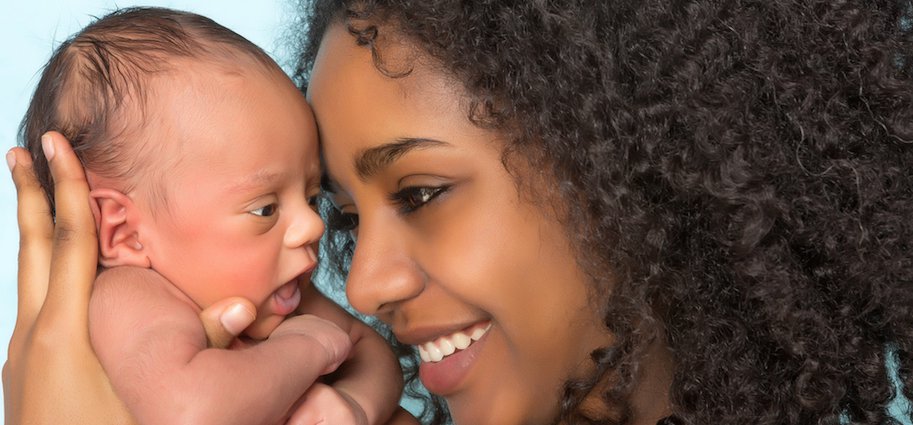
New America’s Early & Elementary Education policy team has been making its way through the National Academy of Medicine’s Transforming the Workforce report. And we’ll be sharing our takeaways periodically. Chapter four highlights several studies that show why babies are smarter than we think. Many people often make assumptions about what babies are capable of understanding. For instance, some mistakenly think children are solely concrete thinkers; however, research shows that infants and young children are able to think abstractly. Here are eight facts that show babies are smarter than you might have thought!
In other words, babies can use the information about the statistics of syllables to parse the words they hear in a person’s speech. For instance, over time, they begin to understand the difference that prettybaby is pretty baby and not pre tyb aby.
Babies can even learn from a person communicating with them in real-time through a webcam, but there is no evidence of learning through a pre-recorded video. Live video conferencing with the webcam allows children and adults to have a back-and-forth conversation, eye contact, and gesturing, which help the baby to recognize that someone is teaching them. For example, talking or singing to a baby can help them learn new things.
Giphy
As infants transition to the toddler years, they are able to distinguish trusted sources of information without eye contact and gesturing. They are able to understand implicit pedagogical guides in speech or in other words learn from adults who are trying to teach them something.
Giphy
Babies are able to predict the statistical likelihood of an event by remembering regular occurrences in their environment. In one study, 11-month-old babies were shown a box of red balls with only a few white balls. Babies were surprised when balls were poured out of the box and all of them happened to be white or when someone reached into the box and continued to pull out white balls. They understood the small proportion of white balls in the box made it unlikely that only white balls were selected, but if the experimenter looked into the box before retrieving a white ball the babies were not surprised because they understood that the adult was selected only the white balls. As babies and toddlers learn more, they begin to make sense of the world around them.
Giphy
Children build a mental map as they experience the world around them. They understand that people have negative and positive feelings in response to the world around them. They also understand that people are goal-oriented and intentional in their actions.
Giphy
Young children learn from a trusted adult how to interact with and react to other people. For example, if a child meets a stranger for the first time, he may look to a trusted adult for support to understand if this new person is friendly.
Giphy
Babies learn to filter information. They are able to distinguish if an adult is teaching them a new word when the adult points to a new object and make eye contact as they say the word.
When a baby is able to understand the goal of another person this is called shared intentionality. By 18-months-old a shared intentionality is what enables toddlers to help adults. For instance, if an adult drops an object and needs help, the toddler will pick it up for them.
Gifs.com
When babies are in high-quality early learning environments, their brains are able to grow and develop to their full-potential. It is important to remember that babies and toddlers are forming their understanding of how the world works and how the people in it operate. Early childhood educators and families can foster healthy development by talking, singing, and interacting with young children.
Policy Analyst, Early & Elementary Education