Designing Policy Solutions with Community
Lessons Learned from the CivicSpace South Chicago Climate + Housing Convening
Blog Post
Joshua Jackson / 720Films
June 27, 2025
In April 2025, New America Chicago and the Future of Land and Housing team at New America convened the first of its kind CivicSpace community design session in South Chicago. The original vision for Climate Change, Housing, and Migration in South Side Chicago: A Community-Centered Conversation was a convening that would explore how Chicago can position itself for climate-resilient and equitable economic growth and housing security in the face of climate change, with a specific focus on the needs of Black and Latine communities in South Chicagoland.
The convening built off of an April 2024 report on climate migration produced by New America’s Future of Land and Housing program that lays out a framework for understanding the impacts of climate change on the housing security of the people who will be displaced by climate disasters, the people who remain in vulnerable areas, and the people who will receive an influx of climate migrants into their communities. The team decided to focus the event on the South Side of Chicago due to the impact rising lake levels and increased flooding have had on housing in the area, the potential for higher displacement due to climate migration, and the relative lack of policy attention and resources compared to North Shore suburbs. A core goal was to bring together a mixture of community members, community leaders, and subject matter experts to educate participants, raise issues, and brainstorm potential solutions to the challenges that climate change will present in the future.
Event Planning and Community Recruitment with Local Partners
One of the first steps taken was finding a human-centered design firm to co-design the event. We partnered with Heartland Next, a Black and woman-owned marketing and public affairs agency working towards a better future. In collaboration with Heartland Next, we built out a list of invitees from organizations such as the Chicago Metropolitan Agency for Planning (CMAP), Far South CDC, Elevate, and the Law Center for Better Housing, among others. Some of the potential invitees were tapped to give presentations themselves at the event, and others were intended to lend their expertise in group discussions. We also reached out to a few organizations that are grounded in nearby communities and respected for their knowledge of the challenges related to housing and homeownership, to help act as co-hosts. Greater Chatham Initiative and the Mansueto Institute were happy to join in that capacity. In addition, local policymakers that could have an impact on some of the policies discussed in the session were also recruited for the session. This included policy team members from the Cook County President’s Office, the Cook County Assessor’s Office, and the City of Chicago Housing Department and Department of Planning and Development.
Source: Joshua Jackson / 720Films
The team decided early on to hold the event in the community rather than at our downtown office at The Chicago Community Trust. While the search for a large enough space pushed our timeline back, the team was ultimately happy we’d decided to hold the event in South Chicago. Claretian Associates, an influential affordable housing provider in the area, provided the team with space in their recently renovated community center gym. This choice allowed us to host the event in a space more convenient to community members. Perhaps most importantly, it brought policymakers and business leaders to see South Chicago and allowed the team to share resources with a local nonprofit in the form of a rental fee, as well as small, Black-owned businesses in the area. However, the space had some drawbacks. It had large windows and automatic lights that made using our powerpoint projections difficult. Parking and public transportation were also somewhat limited but were ultimately sufficient.
To recruit community members, we focused on a range of zip codes from the South Chicagoland area. With support from the Greater Chatham Initiative, the CivicSpace team spread word of the event through physical flyers, Craigslist ads, and partner organizations. Potential participants were required to fill out an intake form to ensure that demographic characteristics were captured, as well as to check whether or not they fell within the correct geographical area. The team wanted to find a mix of racial and ethnic backgrounds that represented the population of the area fairly well, as well as a mix of genders and different housing situations. We decided to make sure people with a variety of views on climate change were included in the group to hear from all different sides. Initial recruitment efforts yielded a high number of renters, so midway through the process we edited flyers and reposted the Craigslist ad to specifically focus on homeowners and landlords. This allowed us to get a mix of renters, homeowners, and building owners.
New America staff members then conducted phone calls with people who fit the needs of the event and asked a series of questions about their concerns regarding climate change, their hopes for their neighborhood, and what informed their interest in the event. As with other CivicSpace events, the calls help the team select people who would be engaged, but not take over the conversation. The calls also help weed out individuals who don’t fit the research criteria but register to receive the gift card. The process yielded 28 community members who were invited to join the convening. As part of the intake process, we also received responses on people’s top fears about climate change, or lack of concern in a few cases, from 110 residents.
Session Structure, Activities, and Lessons Learned
The structure of the convening was split into short lectures by subject matter experts and a series of discussions wherein all attendees, whether they were nonprofit leaders, government officials, or community members, were grouped together to collectively design potential futures for their neighborhoods. This approach was based on the concept of futurism, or the strategic foresight process. This is a framework in which participants identify trends within the scope of the chosen domain or topic area, imagine several plausible futures that those trends would yield, envision what a successful future would look like in this domain, and then build out steps for what would need to change to get from the plausible futures to the ideal future. The trends could encompass social trends, technology trends, economic trends, environmental trends, or political trends. Trends must be based on demonstrable facts that can be proven with statistics. The team choses a year to focus on when one or more important trends may have a large impact on that domain, such as when a large generation will retire.
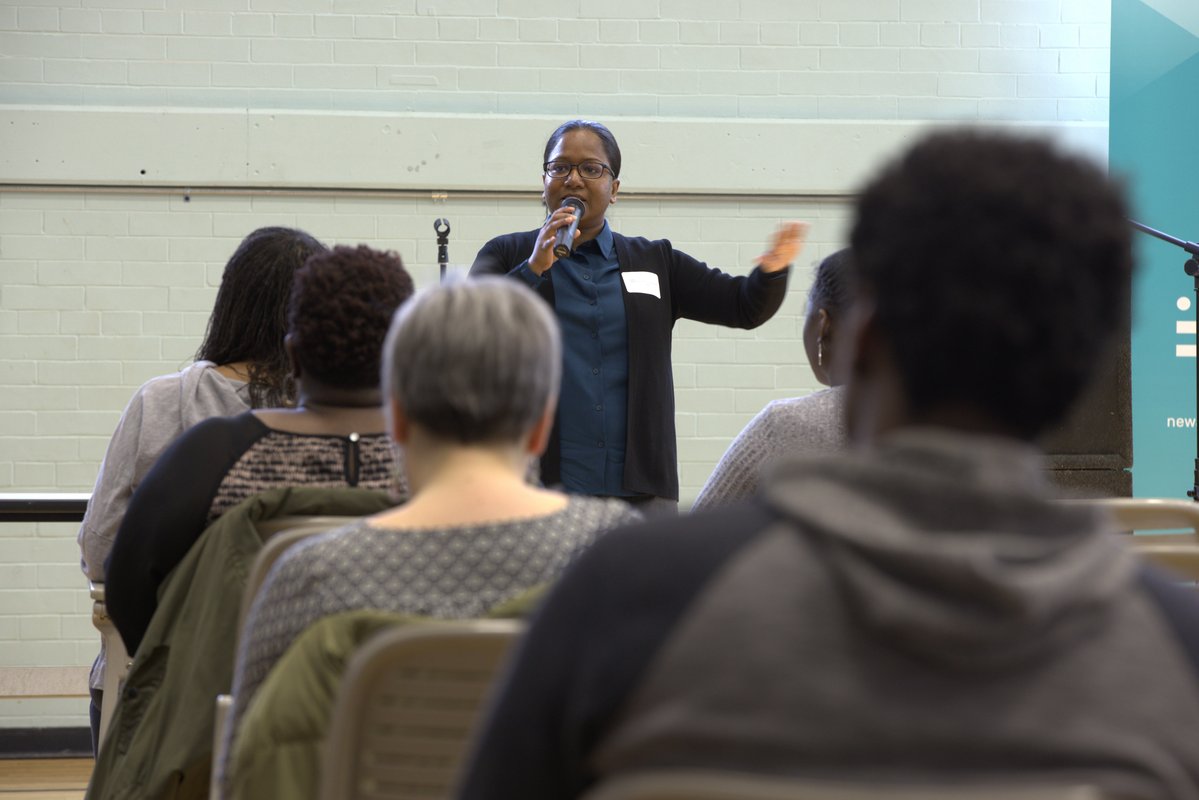
To prepare for this convening activity, the team selected the domain of Affordable Housing in South Side Chicago by 2050, a year when most Baby Boomers will have already transitioned homes to younger generations. Four speakers were chosen to give lightning talks in order to help everyone in the room start with similar information about the state of the housing market on the South Side, changes to the lake and other impacts of climate change, as well as expected climate migration trends in the area. These speakers were experts in their fields representing The Institute of Housing Students at DePaul University, Woodstock Institute, The Walder Foundation, and The Chicago Metropolitan Agency for Planning (CMAP). All met with the New America team to go over topics in advance and provided a wealth of information for participants (see slides). The key challenge with this aspect of the agenda was keeping information at a high enough level so meeting attendees could stay engaged, while sufficiently covering a diverse range of really important factors that should be taken into consideration when planning for the future. For future events, the team would likely rely on advance reading or short videos rather than lightning talks so participants have time to process the information prior to the group discussions.

Source: Joshua Jackson / 720Films
The New America team also created trend cards focusing on the following topics: rising lake levels and increased flooding risks, the shifting racial and ethnic demographics on the South Side of Chicago, more intense heat and stronger storms, housing and land use in the South Side, political disagreements on climate change programs and policies, domestic climate migration, international migration, South and West Side job losses, and homeownership and access to mortgage lending and other capital. We then used these trend cards to write potential future scenarios to share with the participant groups as guidelines and examples of futurism at work, taking the format of short stories to provide a relatable entry to each scenario.
The trend cards and futurist scenarios were not presented to participants until the day of the convening. Going forward, it would most likely save time on the day of the event to provide attendees with brief reading materials that describe the concept of futurism and include the trends and scenarios that they will then be asked to discuss in person during the event.
In keeping with the CivicSpace ethos, the team wanted to ensure that all participants, regardless of their position or authority were recognized as important contributors to the process. The team intentionally designed activities to make participants feel comfortable and on equal footing. We made it clear from the beginning that everyone in the room brought different types of useful expertise. We also avoided introducing powerful policymakers or nonprofit leaders as special guests to ensure that residents felt comfortable sharing their experiences without deferring to more powerful audience members. On the day of the convening, upon their arrival, all attendees – regardless of whether they were community members, nonprofit leaders, government officials, or subject matter experts – were asked to answer the question “What is one word that describes your hopes and dreams for housing in your community’s future?” through a mentimeter link that then displayed the answers in a word cloud. After introductions, speakers from various partner organizations gave lightning talks on the realities of housing, climate change, and migration.
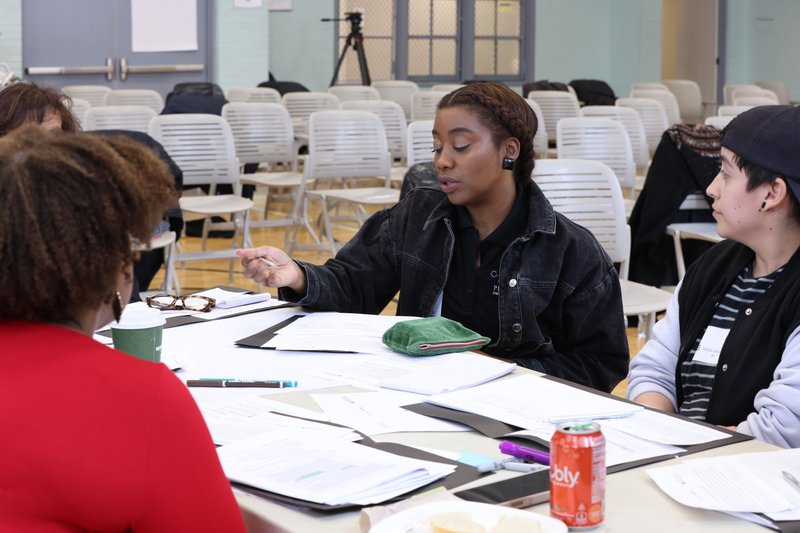
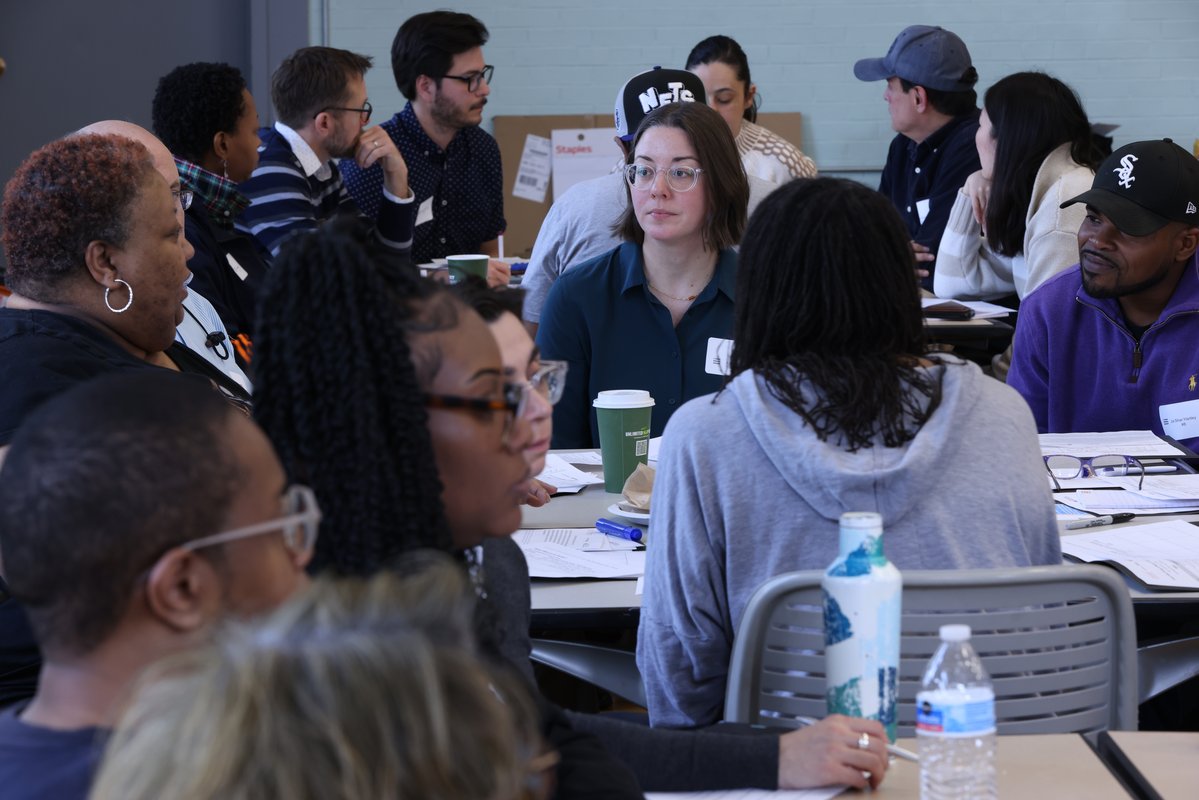
Next, all participants were split into 9 groups, which were a mixture of technical experts and residents. Each group was assigned one facilitator, including some of the experts from the lightning talks. The groups received instruction handouts, trend cards, and worksheets to get their thoughts flowing. Each group also received one neutral or positive and one negative future scenario to see an example of how a scenario might be constructed. Some groups had one or more scenario in common.
The groups then completed two scenario planning activities, with group share-outs following each planning session. The first session included time for talking through the trends presented, then each group was instructed to imagine their ideal future for housing on the South Side and describe what that future looks like. The second session began with reviewing a few different possible scenarios, then each group created an action plan to lay out steps towards the preferred future they devised in the first activity. Finding enough facilitators and quickly preparing them to use a futurist approach was somewhat challenging, but we found that facilitators adapted fairly quickly to the task at hand.
Source: Joshua Jackson / 720Films
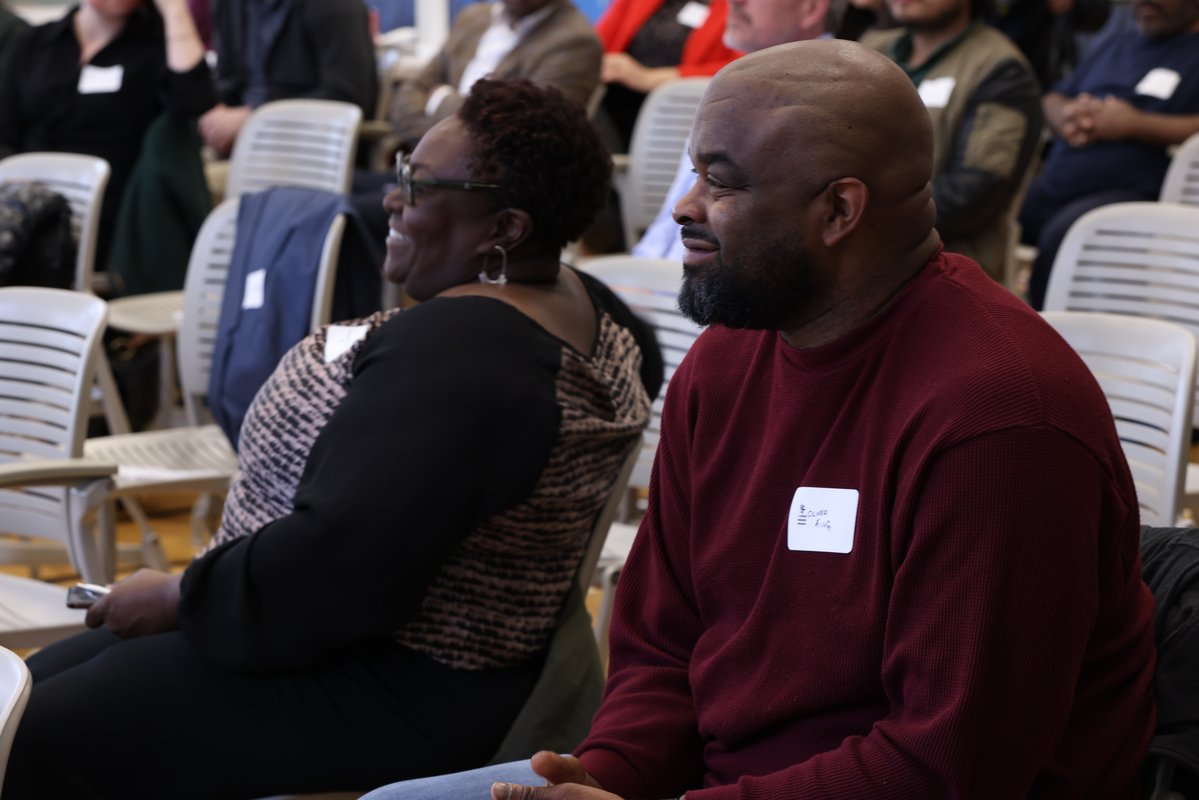
Many common themes arose throughout these activities, including the need for flood mitigation measures, the desire for communities to be included in the design of housing and urban infrastructure, the need for creative solutions that build on existing community resources, and a push for green spaces and fewer vehicle emissions in order to make South Chicagoland communities more walkable. However, discussion on the results of future climate migration was limited. We concluded that providing more informative handouts about the effects of climate change and the future of climate migration before the event may have deepened the conversations and allowed for fuller engagement with the intersection of climate change and affordable housing issues.
Additionally, both group activities ended up feeling somewhat rushed, as the groups did not have the time to both fully process and discuss the trends and scenarios and also build out their own action plans for their preferred futures. Although we originally made the choice to cap the event at four hours, going forward, we believe that a full day event, especially given the incentives offered and how much participants seemed to enjoy the conversations, would better serve the conversations that we were hoping to have. With a few more hours, participants would have the opportunity to more fully metabolize the information that experts presented and have a more balanced discussion between housing concerns and the effects of climate migration.
Next Steps
Convening people from across the South Side, in equal partnership with experts in housing, environment, and leaders of nonprofits, philanthropy, and local government was fulfilling and productive. Together the groups came up with creative solutions to some of the challenges that face communities all over the United States, as we learn how climate change is impacting housing security and our economy more generally. However, the practical solutions developed by the community aren’t helpful unless they are put into practice. As a next step, our team hopes to match this event with smaller community design sessions in other cities or counties. Once challenges and ideas are surfaced from each of these areas, we plan to share these findings with policymakers, advocates, and philanthropy to help conceptualize policy and investment solutions that work across multiple states.
Source: Joshua Jackson / 720Films
Event Resources and Materials
- High level agenda
- Trend cards shared with each group
- Sample scenarios
- Group discussion handout
- Community resources document shared with group
- Opening question mentimeter results and future scenarios from the results of three discussion groups
- Initial findings and video highlights
This convening was generously supported by The Kresge Foundation and Associated Bank.
To support future CivicSpace convenings and help bring community-driven climate and housing solutions to life, consider making a donation to sustain this important work.