How Playful Pedagogy Supports Curricula and Other Learning Goals for Children
Play and academic instruction are a powerful combination in early childhood education
Blog Post
Feb. 27, 2026
This month at Urban Sprouts, an early childhood center in University City, MO, a group of educators are responding to a request from their most important clients: the young children in their care. Their preschoolers want to write letters and have them delivered to their friends, siblings, and teachers in other classrooms.
Other educators might hold off, reasoning that the children aren’t even reading yet. But not Donda Miller, Urban Sprouts’ senior director of community of practice. She is getting to work.
“We are setting up a mail system,” Miller says. Ellicia Lanier, Urban Sprouts’ executive director, had charged Miller with empowering Urban Sprouts educators to set up active, social, playful, and meaningful experiences that help young children learn. So Miller and her colleagues are creating a space for children to write, draw, and create letters using paper and crayons.
The educators are also guiding the children to determine who will be the mail carrier, who will set the schedule for deliveries, and who will receive the mail at the other end. Miller knows children yearn for opportunities to imitate and practice what they see adults doing. In her experience with similar settings, she has seen how children’s marks might look like scribbles but are actually an early attempt at writing. Adults can ask children what they have written, giving them a chance to speak and explain themselves.
“Children will see that writing is communication,” Miller says. “And children at some ages, maybe four or five, or earlier, will understand that they need people to understand what they have written.”
Urban Sprouts is one of many early childhood centers around the country matching the science of learning with the “how” of teaching: how to create experiences rooted in the science of child development, with specific goals and a deep understanding of the sequence of skills that children are building upon. These are components that have become an important part of developing quality child care, pre-K, and primary school programs, and are among the many lessons in the 2024 report from the National Academies of Science, Engineering, and Medicine, A New Vision for High-Quality Preschool Curriculum. It analyzed curricula and synthesized research to show how much children benefit from a combination of quality curriculum plus teaching practices informed by the science on how children learn.
The National Academies work also aligns with many of the same insights that propel the work of Trust for Learning, a philanthropic partnership that helps to expand publicly-funded early learning programs aligned with what it calls the principles of ideal learning environments. And similar findings are emerging from a large-scale, five-year study called Active Playful Learning (APL), underway in the early grades in 65 schools across California, Illinois, Texas, and Virginia.
It is not a given that early educators will know how to apply this kind of pedagogy while also making smart decisions about the curriculum and instructional resources they are using. False dichotomies continue to plague the field. Too often caregivers, parents, and teachers think that active playful activities will take the place of needed instruction in literacy or math.
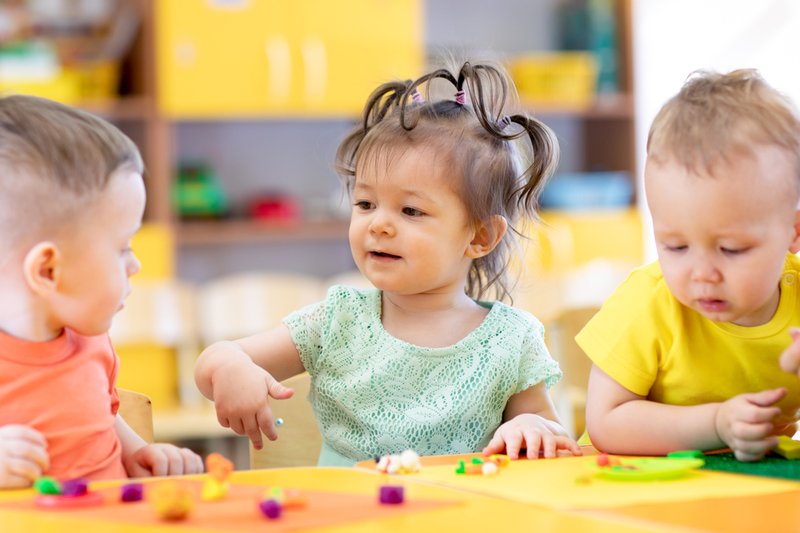
But play and academic instruction are not diametrically opposed; in fact they can and should work together. Studies show that the use of playful learning and other social, active, and meaningful teaching techniques help children more easily build literacy and numeracy skills, while also developing durable skills like cooperation and problem-solving. A high-quality curriculum will be more effective when married with pedagogical strategies that motivate children, help them retain what they learn, and stoke their appetite for more. As noted in the 2024 National Academies report:
“Children learn in a multiplicity of ways, including child-initiated and teacher-guided play, exploration, observation, social engagement, intentional teaching in small and large groups, individual hands-on experiences, and other pedagogy that is responsive to their strengths and interests.”
A 2025 Brookings Institution white paper that synthesizes findings from decades of research on learning and development covers some of the same ground. The paper sets up the reasons behind the Active Playful Learning study, which applies what is now becoming well-known science on supporting brain development in young children. The authors put it this way: “If we teach in the way that human brains learn, children will learn better.”
Overcoming misunderstandings about how children learn will take time. But in Urban Sprouts, which Trust for Learning has highlighted as a Reggio Emilia example in its resources, educators are learning how powerful it can be to incorporate child-led activities and guided play into their classrooms and out on the playground. The program, founded by Lanier in 2009, was designed to support children and families in lower-income areas. It has grown from a three-classroom building to a six-building campus with 40 educators, 142 children, and a waiting list of 650 more. Educators participate in facilitated meetings reflecting on their own childhoods and preparing themselves for taking on new methods of teaching, such as the system for letter-writing.
“It is the investment in the adults that really has an impact on these children’s lives,” Lanier said. “And we found that a lot of what they need to be successful are, yes, the tools such as curriculum, and yet they also need to know their own worth.”
Another example is a curriculum-and-pedagogy program called Tools of the Mind, which purposefully integrates playful, active, and social learning activities with specific learning goals. Tools of the Mind is based on the educational philosophy of Lev Vygotsky, an internationally known child development expert of the 20th century who focused on how to scaffold children’s learning. Tools of the Mind provides teachers with instructional materials and shows them various techniques for helping to stretch children’s thinking and build progressively on their skills. This can take the form of make-believe play, with kids taking on different roles in, say, pretend restaurants, post offices, or barber shops. It also features dialogue among children, instead of children just being receivers of knowledge. In a Tools of the Mind pre-K classroom, the usual “morning meeting” looks different. “Instead of calling on students and having them raise their hands,” said Elena Bodrova, Tools of the Mind co-founder, “we ask them to turn to their friend on either side, and this way everyone has a chance to talk.”
Tools of the Mind has expanded to 32 states and now serves 76,100 children. Some teachers using Tools have been actively posting on X (once Twitter) and Facebook. Their feeds are filled with photos of pairs of children facing each other, deep in conversation, as well as children taking on roles of nurses and doctors in pretend hospitals, writing on charts to show their pretend patients’ progress.
With Tools, like Urban Sprouts, leaders focus on supporting teachers to use these pedagogical strategies. This helps them become confident in providing guidance, providing children materials, and setting up environments that enable them to practice and try out activities that build language, literacy, mathematics skills as well as increase their vocabulary and content knowledge. The work aligns with the National Academies report’s emphasis on professional development and its finding that “coaching, training, and/or mentoring” are key factors for ensuring curriculum quality and effectiveness.
The Active Playful Learning (APL) study, funded through nearly $20-million from the LEGO Foundation, focuses on training coaches and teachers too. As part of the five-year study, teachers in the K-4 grades are given training and coaching in pedagogical techniques for what the project leaders call “playful learning,” learning that is active, iterative, engaged, meaningful, socially interactive, and joyful. As noted on the Active Playful Learning website, this approach is integrated into the context and culture of the school community; teachers apply the approach while using existing curriculum.
Baseline data gathered before the coaching started showed that the predominant modes of teaching offer few opportunities for social interaction; children usually received whole-group instruction, facing a teacher doing most of the talking. Early results from a pilot study in New Hampshire showed that the APL coaching encouraged teachers to support children’s conversations and collaboration. In that pilot, 92 percent of teachers said they would recommend this new approach. Results from year 1 of the study, said Kathy Hirsh-Pasek, one of its founders, show that APL is “making a dent in reducing whole group instruction,” with an increase in students working in pairs. (Full disclosure: Hirsh-Pasek is also a co-founder of the Learning Sciences Exchange at New America.)
It’s noteworthy that the APL study is in elementary schools, not preschools. This may be good news to preschool educators who worry that current kindergarten pedagogy may be an abrupt shift for kids to absorb, especially when kindergarten teachers rely on whole-group instruction that requires students to sit still for long periods of time. But if kindergarten students get opportunities for small-group instruction and active playful learning activities, they have a chance to build on the skills of collaboration and communication they learned in preschool, while improving their academic skills too.
Ultimately, these examples show the importance of making sure educators, across all the years of early childhood birth through age eight, gain the professional development needed for preparing and setting up effective educational experiences. This was the lesson ten years ago of the National Academies report Transforming the Workforce for Children Birth through Age 8: A Unifying Foundation. And it continues today through the 2024 National Academies curriculum report. It concludes with a call for a “commitment to refining and improving early education practices,” recognizing that children need access to “rich content and playful educational experiences that build their foundational skills.”