When Force Replaces Frameworks: What Iran Signals About the Future of Arms Control
Blog Post
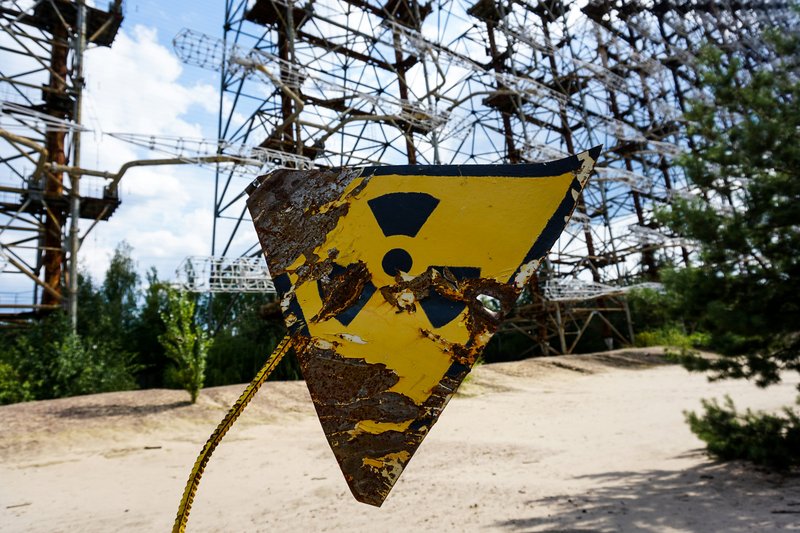
Ilja Nedilko, Unsplash
March 2, 2026
For much of the nuclear age, even the most dangerous crises unfolded within a framework of negotiated limits. Military force was always present, but it was bounded by treaties, inspections, and procedures that defined what was allowed, what counted as a violation, and how disputes would be handled. Today, the firepower remains, but the guardrails that once restrained it are weaker.
Arms control rested on goodwill. Agreements were backed by deterrence and the prospect of punishment. During the Cold War, the United States and the Soviet Union signed treaties while maintaining vast arsenals. Inspections, hotlines, and dispute procedures functioned in the shadow of credible force. Restraint and coercion were linked. Limited uses of force short of full-scale war were part of statecraft, but they operated within a broader effort to stabilize competition through rules.
The shift now is not from diplomacy to force. It is from force operating within rules to force operating without them.
The Iran case shows how that balance has changed. The 2015 Joint Comprehensive Plan of Action (JCPOA) placed Iran’s nuclear program within a detailed framework. It capped enrichment, mandated intrusive inspections, and created clear procedures for resolving disputes. After U.S. withdrawal in 2018, Iran moved beyond its enrichment limits. While not a perfect agreement, during its period of implementation, the JCPOA constrained key elements of Iran’s program and provided transparency that had not existed before. Sanctions pressure and the possibility of escalation helped bring Iran to the table and reinforced compliance. Force stood behind the agreement, not in place of it.
When the United States withdrew from the JCPOA, that framework began to collapse. What followed were cycles of sanctions, covert action, and now overt military strikes. None of this is unprecedented: states have long used force short of war to shape adversary behavior. What is different today is that these actions are unfolding without a shared expectation that binding nuclear limits will be rebuilt.
That difference matters.
Historically, when nonproliferation agreements faltered, breakdown was treated as destabilizing and temporary. After North Korea withdrew from the Non-Proliferation Treaty in 2003 and the Agreed Framework collapsed, the Six-Party Talks were launched to restore constraints, though those efforts ultimately failed. When Iraq’s clandestine program was uncovered in the early 1990s, the response was the creation of more intrusive inspection authorities and, eventually, the Additional Protocol to strengthen safeguards globally. After India and Pakistan tested nuclear weapons in 1998, the emphasis remained on reinforcing export controls and tightening the nonproliferation regime rather than abandoning it.
In each case, breakdown prompted renewed diplomatic effort and institutional adaptation. Agreements collapsed, but the expectation of repair remained.
In the Iran case, collapse has instead led to episodic management. Over the past several years, a new pattern has emerged: nuclear advances are met with sanctions, covert disruption, or military strikes that degrade or delay capabilities. What is missing is a sustained diplomatic process to restore binding ceilings. The risk is that this pattern becomes precedent.
The consequences accumulate. If agreements are seen as short-lived while coercion is recurring, states will invest less in compliance and more in resilience. They will hedge. They will preserve technical expertise, build redundancy, and shorten timelines to survive the pressure. If future cycles occur, each will further reduce the political and strategic incentives to return to formal constraint.
Other states are watching. If negotiated limits appear fragile while pressure is recurrent, the rational strategy is to plan for survival under coercion rather than integration within a system of rules. Over time, that logic makes durable restraint harder to build.
The question raised by the current U.S. military campaign is not whether force has a role in nonproliferation. It always has. The question is whether force is reinforcing a system of limits or replacing one.
If replacement becomes the norm, this is more than just another crisis. It signals a phase in which nuclear competition is managed case-by-case, guardrails are thinner, and rebuilding durable limits becomes harder each time they collapse.