Africa’s Role in the AI Supply Chain: Why Infrastructure Control Matters More Than Digital Sovereignty
Blog Post
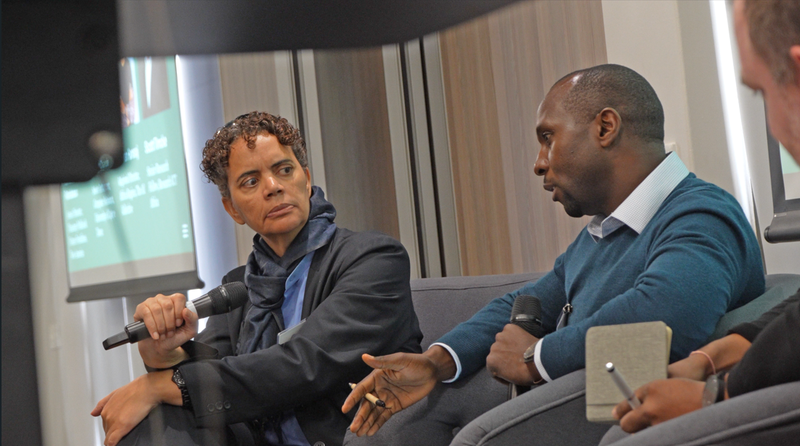
Planetary Politics team.
Feb. 4, 2026
The Léon Thévenin does not look like a vessel on which the future of artificial intelligence depends. It is squat and workmanlike, built in the early 1980s, with a blunt bow and a deck cluttered with winches, cranes, and spools of cable. Operating from Cape Town, South Africa, at up to $120,000 daily, it maintains over 60,000 kilometers of undersea infrastructure from Madagascar to Ghana—Africa’s only permanently stationed cable repair ship servicing a continent whose digital economy grows more critical to global markets each year.
For decades, France’s Orange Marine has deployed the ship when something breaks far from shore. When that happens, the 60-man crew lowers equipment thousands of meters into the dark, searching for fiber-optic cables, carrying hair-thin glass strands. Repairs take days, sometimes weeks. When cables work, nobody notices. When they fail, everyone does.
In August 2023, they did. Three major cables failed simultaneously in the Congo Canyon, 200km west of the Congo River's mouth. The canyon has the world's strongest turbidity currents—sediment flows that snap cables during seismic activity. It was the second failure in three years. Internet traffic slowed or stopped across West and Southern Africa. Banks struggled with transactions. Hospitals lost cloud access. Airlines, ports, and logistics companies improvised. Governments waited. The Léon Thévenin sailed into one of the world's most treacherous repair zones. Crews worked 48-hour shifts for weeks.
This was a glimpse of how digital power is exercised—and constrained—in practice.
The outage offered a lesson about where power actually resides. Control does not lie in ownership documents or landing rights. It lies in maintenance capacity, logistics, and the ability to respond to failure. In a system where nearly all intercontinental data travels through submarine cables, the ability to fix failures quickly is a form of power. But cable repair is only one chokepoint among many. Power accumulates wherever operational control matters: who supplies the electricity, who refines the minerals, who sets the technical standards, who decides how systems interconnect across jurisdictions.
That the Léon Thévenin operates from Cape Town reflects South Africa's position as the continent's largest economy—with a GDP of $426 billion–and its role as Africa's infrastructure hub. That same positioning enabled South Africa to host the first G20 summit on African soil in November 2025. Yet the summit exposed a harder reality: the central challenge for rising middle powers is not proclaiming digital sovereignty but securing meaningful influence in systems built, maintained, and largely controlled elsewhere.
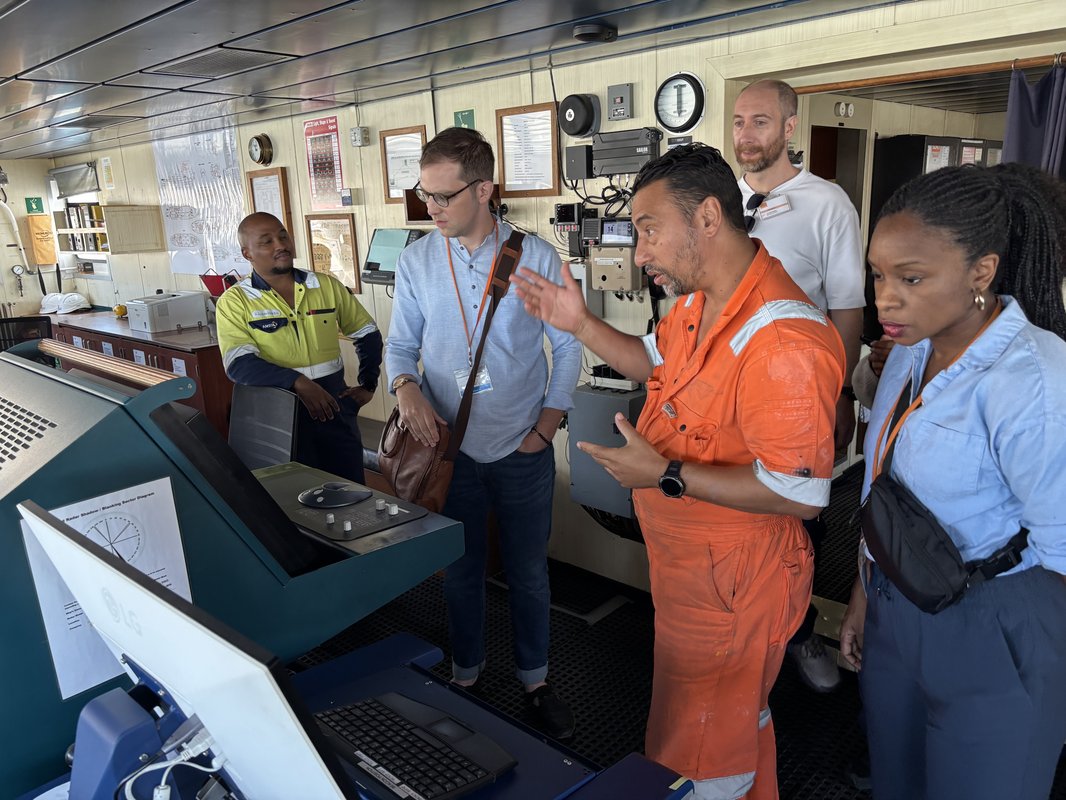
Digital Futures Symposium participants get an overview of the navigation system on board Africa’s sole subsea cable repair ship, Orange Marine’s Léon Thévenin.
Source: Planetary Politics team.
That reality is visible on land as well. South Africa’s Centre for High Performance Computing (CHPC) operates one of the continent’s most advanced computing clusters from an unassuming building in a residential neighborhood in Cape Town. The center’s engineers juggle public research mandates with private contracts to stabilize funding, access quantum resources through external partnerships, and manage persistent electricity disruptions. The center demonstrates technical competence and institutional creativity. But hardware procurement lags frontier deployments by years, and supply chain bottlenecks and the instability of the country’s electrical grid shape every investment decision.

Yauvan Hansraj, Regional Director for Africa at The AI Collective, tours the massive server banks at South Africa’s Centre for High-Performance Computing during the Cape Town symposium.
Source: Planetary Politics team.
These constraints matter as stakes rise: Africa’s population will reach 2.5 billion by mid-century, with over a billion people online by decade's end. As AI integrates into finance, healthcare, and government, dependence deepens.
This sharpens the question. If the United States and China control the AI stack from chip design to cloud infrastructure and frontier models, and the European Union shapes digital market rules, what room exists for others to shape outcomes? For South Africa, the answer isn’t in declarations of digital sovereignty. It lies in prosaic terrain: who controls the cables, supplies electricity, refines minerals, and coordinates markets beyond borders.
The Limits of Sovereignty Talk
Much of the current answer is framed in the language of sovereignty. Chipmakers and cloud providers promote “sovereign AI” as a path to autonomy, even as countries pursuing it remain dependent on foreign semiconductors, offshore manufacturing, and external cloud platforms at every stage. True sovereignty would imply control over those supply chains themselves. For most states, that option does not exist.
Africa’s experience makes the problem visible. The AI boom is poised to boost economic growth by the billions. Governments across the continent have adopted national AI strategies, issued digital transformation plans, and courted foreign investors to build data centers. These moves signal ambition. But they are overwhelmingly pursued on a country-by-country basis, with little coordination on procurement, energy sourcing, or data governance. The result: fragmentation.
Nigeria’s reluctance to join AfCFTA illustrates the trap: officials feared open markets would benefit neighbors, but delay only weakened bargaining power. The agreement's Digital Trade Protocol could harmonize digital rules, yet slow implementation lets companies play countries against each other.
The alternative is not autonomy but alignment. Full-stack independence is out of reach for most states. What remains is the ability to spread dependencies, limit coercion, and bargain over labor, energy, and data rules—especially for mineral-rich countries seeking leverage over how the raw materials that feed chipmaking are priced, processed, and controlled. The strategic question is not whether Africa can replicate the AI stack. It is whether it can coordinate around the chokepoints that global systems already depend on.
Africa’s Leverage Lies in Strategic Indispensability, Not Replication
Africa’s strategic advantage in the AI economy does not lie in replicating hyperscale cloud infrastructure or in rebuilding the full technology stack. It lies in chokepoints that global systems already depend on: critical minerals essential to chips and batteries, rapidly expanding populations generating non-synthetic data, pockets of surplus energy suitable for compute, and control over key submarine cable routes linking Europe, Africa, and the Middle East.
The constraint is market structure, not geology. For many technology-critical minerals, prices are not set on deep, transparent exchanges like those for oil or copper. They are set through bilateral contracts tied to assessments produced outside the continent, often tied to processing hubs in China or trading centers in London. African producers, therefore, sell into markets where price discovery, contract standards, and market intelligence are largely external. The result is information asymmetry, not scarcity.
This is why mineral leverage so often appears as blunt export restrictions rather than durable influence. Supply disruptions can move markets temporarily, but without shared pricing infrastructure, they do little to shift bargaining power over processing, downstream integration, or long-term investment. Control over extraction does not translate into control over value.
History offers a more practical model. In the late nineteenth century, U.S. agricultural producers faced similar coordination problems. The solution was not OPEC-style cartelization but market infrastructure—commodity exchanges that standardized contracts and pricing, reducing information asymmetry without requiring centralized control.
Africa lacks an equivalent mechanism for critical minerals. No African exchange plays a meaningful role in global price discovery for cobalt, lithium, or rare earths. A regional minerals exchange, anchored in a politically stable, mineral-producing economy, would not eliminate dependence on global buyers. But it would anchor pricing closer to production, improve transparency, support preferential intra-African trade, and give producers clearer leverage across the mineral-to-chip supply chain—without the fragility of OPEC-style cartels.
Energy and Compute: The Hidden Constraint
If minerals are Africa’s upstream leverage, energy is its binding constraint. This explains why the continent hosts just 223 data center facilities across 38 countries—a tiny fraction of global capacity. Where electricity is unreliable, compute becomes expensive, carbon-intensive, or both.
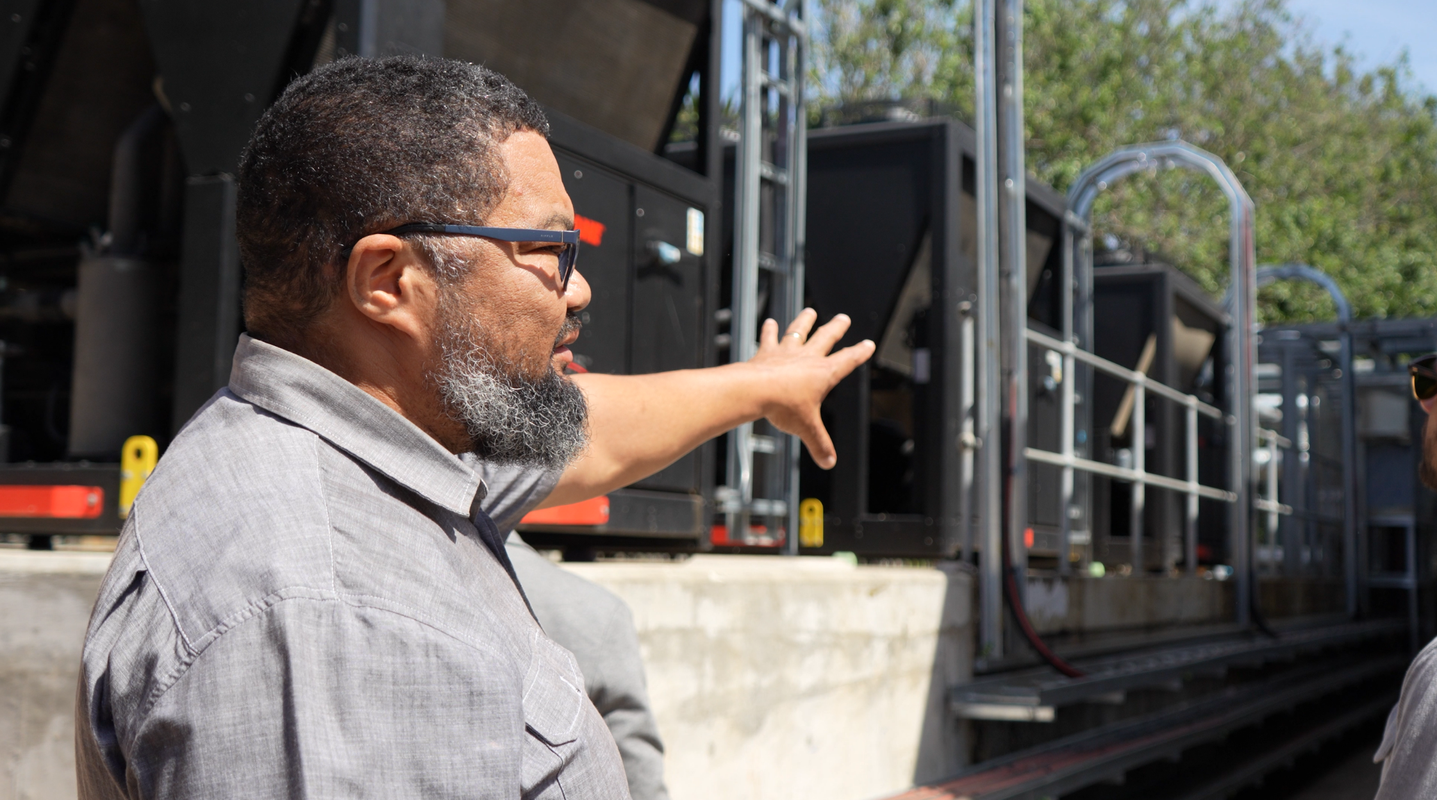
Digital Futures Symposium participants get a firsthand look at energy infrastructure at the Center for High Performance Computing in Cape Town, South Africa.
Source: Planetary Politics team.
Nigeria’s electrical grid has never exceeded roughly six gigawatts of generation capacity for a population of more than 200 million. South Africa, by contrast, operates a system closer to 48 gigawatts for fewer than 65 million people. Nigeria’s 17 data centers collectively require 137 megawatts but must run largely on diesel generators, driving up costs and emissions. The power grid provides just four hours of electricity per day on average, forcing operators into expensive backup systems. In regions facing drought, water scarcity compounds the challenge of cooling systems efficiently.
These disparities explain Africa’s small data center footprin. Investment may triple to $3 billion by 2030, but growth magnifies rather than solves the energy constraint. Power is not an adjacent issue to digital autonomy—it is the limiting factor.
Some initiatives point toward alternative paths. Distributed compute programs, such as UNDP’s timbuktoo initiative, deploy smaller-scale AI infrastructure aligned with renewable energy, serving startups and universities without reliance on hyperscale cloud providers. These models do not rival global platforms, but they demonstrate that useful AI development does not require replicating Silicon Valley’s scale.
Governance Without Illusions
National AI strategies have proliferated across Africa. Regional institutions launched digital trade protocols, payment systems, and broadband initiatives. Enforcement is the problem.
The African Union lacks supranational authority; member states routinely ignore resolutions. The Africa AI Council, unveiled in late 2025, includes 15 members from government, private sector, civil society, and academia. When tech firms help set operating rules, implementation becomes negotiation.
More promising are mechanisms tied to finance and trade. The African Development Bank influences markets through lending conditions requiring local content, environmental safeguards, or skills transfer. AfCFTA’s Digital Trade Protocol, adopted in February 2024 and finalized in eight annexes in February 2025, could prevent regulatory arbitrage by harmonizing data protection and digital taxation—if enforced. The Smart Africa Alliance connects 40 countries and maintains a secretariat that tracks implementation. These institutions lack EU-style binding authority but possess leverage: capital access, market entry, and reputation. Africa lacks mechanisms that make noncompliance costly, but changing that fact with coordinated action is well within reach.
Communities, Ownership, and Political Risk
AI infrastructure imposes local costs while channeling profits elsewhere. Mining operations displace communities and pollute waterways. Data centers strain unreliable grids and compete for scarce water. Projects that exclude local stakeholders from ownership or revenue invite regulatory instability and backlash that no amount of capital can insulate against.
Co-ownership models and profit-sharing arrangements align incentives between investors and communities. Whether such structures can withstand pressure from investors accustomed to controlling terms remains uncertain. What is certain is that ignoring community stakes guarantees friction. Ghana’s Akosombo Dam shifted from British control to state ownership only after decades of community demands—a messy transition that could have been avoided by frontloading participation. Governments now pursuing data center investments while communities protest water use face the same predictable cycle: regulatory delays, legal challenges, and reputational damage.
The choice is not between growth and welfare. It is between building consent early or managing conflict later.
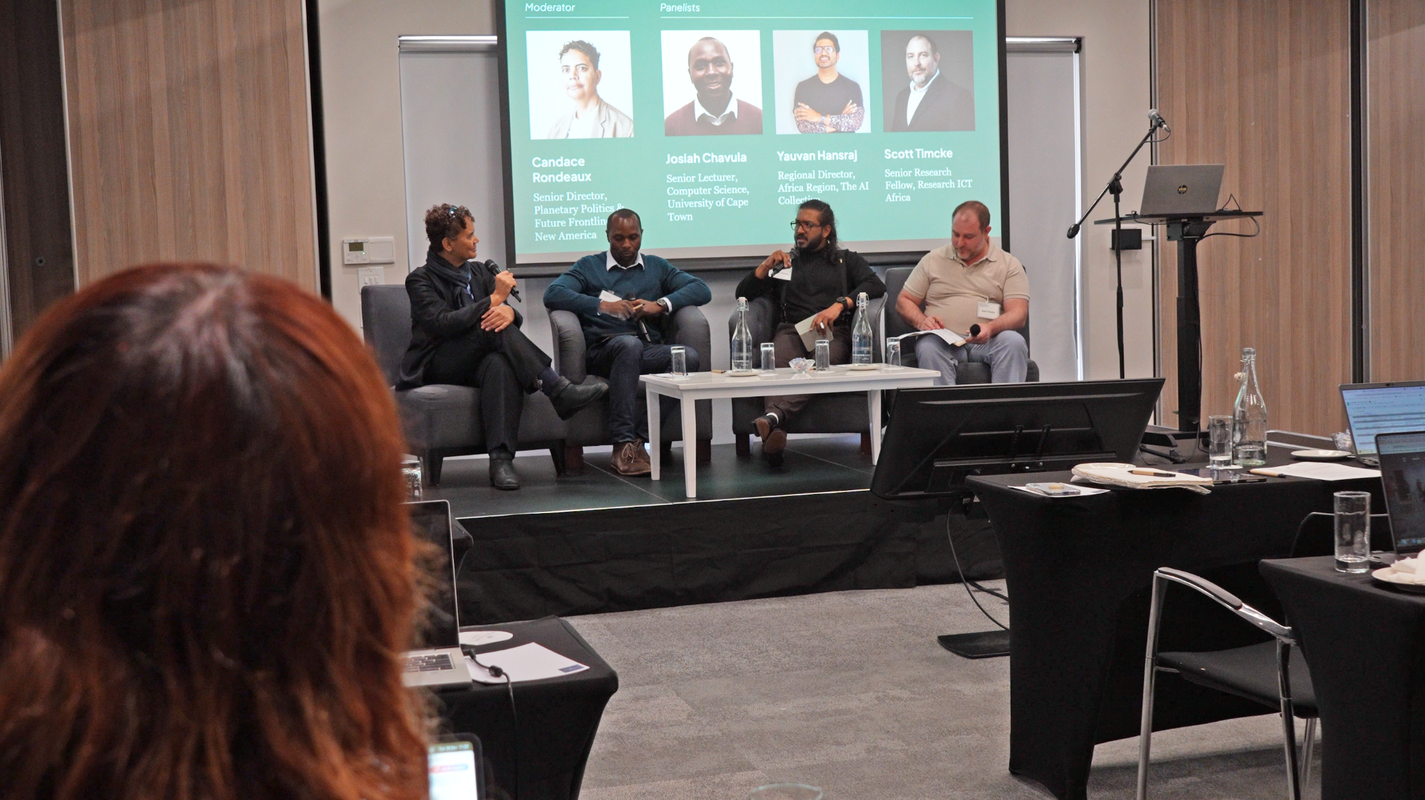
Candace Rondeaux moderates a discussion on connectivity infrastructure with Yauvan Hansraj, Regional Director for Africa at The AI Collective; Scott Timcke, Senior Research Fellow at Research ICT Africa; and Josiah Chavula, Senior Lecturer, UCT.
Source: Planetary Politics team.
Talent: Beyond Salary Matching
Competing on wages with global tech markets distorts economies and fails. Rwanda demonstrates a more sustainable path: subsidized housing, favorable tax treatment, streamlined residency, and access to healthcare and education for families. The package does not match Silicon Valley salaries, but it offers stability and integration. Liberia’s contrasting experiment—offering U.S.-level salaries to returnees in the early 2010s—generated inflation, inequality, and resentment before collapsing under its own distortions.
Skills-transfer requirements offer another lever. Kenya mandates that international tech projects include local training and mentorship as conditions for market access. The result: a generation of engineers now working across East Africa, a capacity that outlasts any single contract.
Talent retention is not about matching compensation. It is about creating conditions where professionals can build careers without sacrificing quality of life.
A Narrowing Window
South Africa’s G20 presidency offered a moment to set agendas. As the United States assumes the presidency in 2026, technology will dominate December’s Miami summit. The window for collective action is narrowing. If African governments fail to coordinate now—on mineral pricing mechanisms, multi-vendor procurement, and enforceable regional standards—Washington and Beijing will negotiate terms that render African leverage moot.
The mechanisms exist: commodity exchanges to anchor mineral pricing closer to production, procurement strategies to limit coercion and regional enforcement schemes that have teeth. But mechanisms unused are mechanisms irrelevant. Africa holds leverage at the base of the AI stack—in cobalt mines, cable landing stations, and energy capacity for data centers. Whether that leverage translates into influence depends on coordination happening before decisions are made elsewhere. The AI infrastructure built now defines options for decades. Leverage unused becomes leverage lost. Africa can ill-afford to be left behind again.