How to Make Emerging Tech Work for Communities with Disabilities
Article In The Thread
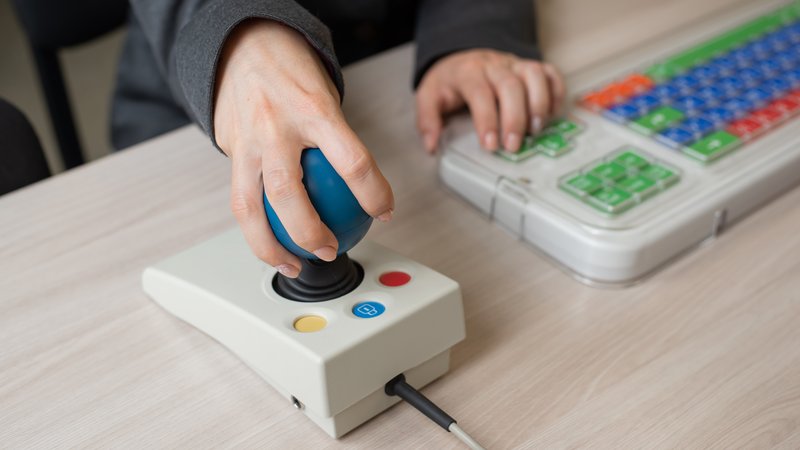
Reshetnikov_art / Shutterstock
Jan. 22, 2026
Conversations about new technology tend to veer between extremes: Either it’s going to save the world or destroy it. But the experiences of people with disabilities highlight that reality is somewhere in the middle. When the right tools—such as telehealth appointments, AI-assisted communication, and online communities—are carefully designed and inclusively implemented, they expand independence and agency.
For individuals like Alisa Yang, Jocelyn (known as Jocy) Mondragon, and Christopher Robin Judson Worth, panelists at New America’s “Bridging the Gaps in Disability Policy” event, technology can be both a lifeline and a barrier. It enables communication, work, and connection, yet systemic problems—from privacy gaps to platform design—frequently make access precarious. By addressing these barriers and designing technology to meet the needs of disabled users, we create digital tools that make spaces more accessible for everyone.
When Digital and Physical Infrastructure Fails
Technology can fill the gaps left by systems that fail to accommodate people with disabilities. Alisa, an artist, filmmaker, and cultural worker who is diagnosed with autism and myalgic encephalomyelitis, encounters this often while navigating health care. Filing insurance claims or accessing care can be complex, time-consuming, and opaque. AI-assisted writing tools now allow her to communicate in the specific language required by insurers, turning a barrier into something she can work with. At the same time, advances in technology that can improve the lives of disabled people often aren’t covered by insurance, Alisa says.
Physical infrastructure, such as elevators and public transit, similarly presents challenges. Chris, a community organizer and researcher with cerebral palsy, had never thought of himself as someone with “significant support needs,” but that is how he has been labeled by professionals in health and education systems. He finds this revealing as everyone, disabled or not, has needs. For example, when escalators are left broken, it creates a barrier for not only the many disabled people who access public spaces but for anyone else who might benefit from the escalator. Chris explains that “disabled folks are often thought of as an afterthought, even when tools that help us help everyone.”
Jocy, a content creator, actress, model, speaker, and activist with a physical disability, experienced these gaps firsthand at a previous job that required her to supply her own equipment and struggle through platforms that didn’t support speech-to-text. The burden of access fell entirely on her. In contrast, her current work with New Disabled South provides the technology she needs, pays for her expertise, and actively seeks new tools to support her—treating accessibility as infrastructure rather than an afterthought. “Disabled folks have been asking for this for years,” she says.
Additionally, Chris shares that without speech-to-text tech, he would not be working towards his PhD. He uses dictation along with screen readers and other accessibility supports. Even then, key tools for academic research—journals, spreadsheets, and qualitative data analysis software—are often incompatible with existing tech, leaving him to rely on his wife to read materials for him.
Making Online Spaces Safe from Surveillance and Threats
Often those with chronic illness and disabilities can feel isolated in an inaccessible world. Some live with unsupportive or abusive families, while others, living alone, focus on simply staying alive. Alisa, who has been labeled as having “low support needs” by health systems, often masks her disabilities, rendering them invisible to most outsiders. But technology offers a digitally enabled third space. Alisa finds online peer communities, like those on Facebook, Reddit, or Discord, to be lifelines for support and understanding that formal care systems do not provide. She can socialize, share resources through mutual aid, and foster belonging, without risking her health in unsafe environments.
When Jocy lived housebound in Louisiana, digital spaces were her main lifeline to the outside world—an experience that became more widespread during the COVID pandemic. “What I have hope for is finding a way to make technology more inclusive to people who can’t leave their homes or their beds,” she says. Since recently moving to California, Jocy has been learning about available state and community resources and depends on online friends to help her access in-home assistance and other support.
“Many disabled people rely on trusted informal networks to meet needs that formal care systems cannot, like finding medication or getting mental health support.”
But digital communities can only truly thrive when participants feel safe. For many, concerns about privacy and surveillance threaten that sense of security. On platforms like Facebook, “we have to be careful of what we share,” Alisa says. “I wish there were other places. Our communities continue to move and transition. Some of us use platforms like Discord and Signal. But the more we stay away from platform surveillance, the harder it is for folks to find our groups and build communities.”
Many disabled people rely on trusted informal networks to meet needs that formal care systems cannot, like finding medication or getting mental health support. Even when they use pseudonyms and other privacy tools, the risk of surveillance looms. And growing political rhetoric that frames disabled people as undeserving of care or a drain on the system can heighten isolation and make online visibility a risk, says Alisa. Identifying as disabled in digital spaces can invite harassment, scrutiny from authorities, or even threats of institutionalization.
“Publicly stating you are autistic, given RFK’s current rhetoric, carries real fears,” she explains, referring to comments from Health and Human Services Secretary Robert F. Kennedy Jr. disparaging people with autism and proposing an autism registry tracking Americans’ personal information. Alisa notes that disabled people also hold gender, racial, and other identities that are attacked by the current administration. Visibility online can lead to targeting by Immigration and Customs Enforcement, harassment from strangers or platforms, or exposure to surveillance that threatens both personal safety and access to essential resources.
As a result, ensuring data and personal privacy for folks with disabilities becomes a mechanism to safeguard not only their security, but also their ability to participate in civic life, access benefits, and engage in community without fear of exploitation or harm.
Inclusion in Developing Technology
Developing technology with key protections in mind creates stronger privacy, clearer access, and more trustworthy digital spaces. Its benefits are shaped by how tools are designed, implemented, and protected. Researchers like Jutta Trevinarus at the Inclusive Design Research Centre explain the necessity of building with accessibility in mind from the beginning of the design process. From digital spaces that foster community, to robust privacy measures, to focused efforts to make platforms and physical spaces more intuitive and navigable, these dynamics show that when we build for disabled users, we create technology that works better for all.
Jocy, who consults on tech and fashion design as a model and content creator, has this advice for developers and designers: “Involve more disabled people when you are doing testing. Hire disabled people and pay them. You’re not going to get that voice and experience from anywhere else.”
You May Also Like
How AI Can Change the Game for Learners with Disabilities (The Thread, 2025): Learning and tech policy expert An-Me Chung explores how AI is transforming accessibility and opening new support pathways for students with disabilities.
Carl the Raccoon and the Power of Inclusive Education for the Next Generation (The Thread, 2024): Carrie Gillispie explores how Carl the Raccoon, a young autistic character from PBS Kids’ Carl the Collector, shows us how disability inclusion in schools and society can build a brighter future.
Follow The Thread! Subscribe to The Thread monthly newsletter to get the latest in policy, equity, and culture in your inbox.