They Can't Shut Us Up If We Shut Them Down
Weekly Article

Jed Winer
Oct. 3, 2019
It’s generally difficult to shake Monday morning D.C. commuters out of their post-weekend torpor—but the purple van blocking the intersection of 16th and K last week probably did the trick.
“ROAD CLOSED. CLIMATE EMERGENCY,” proclaimed a banner taped to the van’s side, before the vehicle—and the climate activists chained its roof—were towed away by the police.
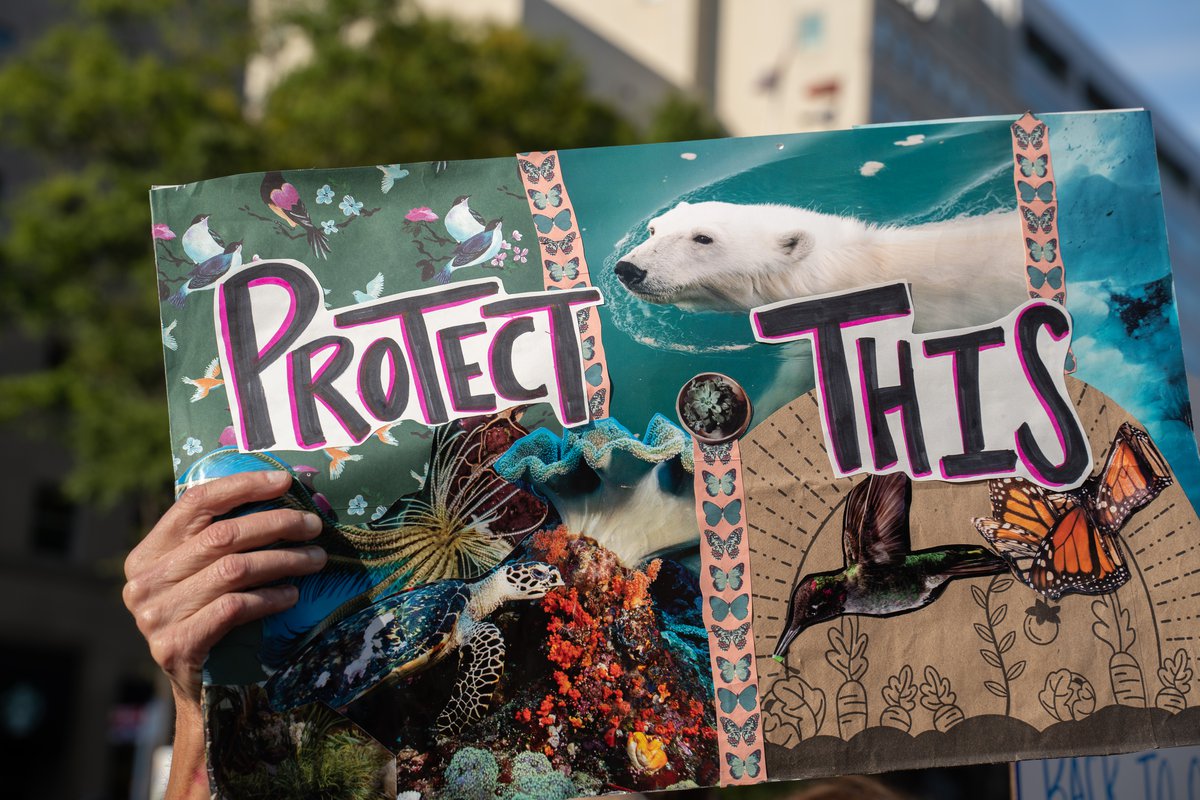
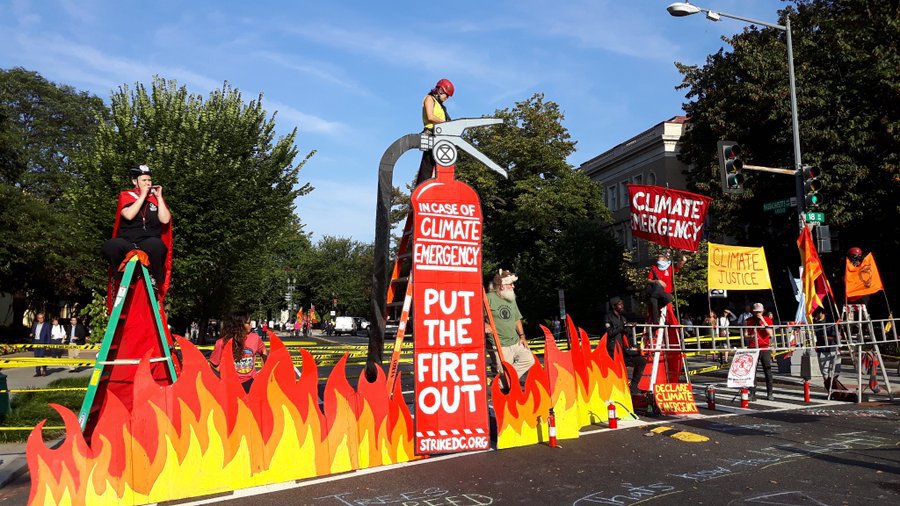
The van was one of several viral images to emerge from the #ShutDownDC climate protests on September 23: a blockade of 22 major intersections throughout the nation’s capital. Organized by a coalition of local climate and social justice groups (including Black Lives Matter D.C., Code Pink, Metro D.C. Socialists of America, Extinction Rebellion, and Work for Peace) and timed to coincide with the United Nations Climate Action Summit in New York, the shutdown formed a striking addendum to the largest global climate protest in history. In total, more than 2,000 supporters participated in the shutdown, propelling it to Twitter’s #2 trending topic in the U.S.
According to shutdown organizer Nick Brana—a member of Extinction Rebellion and founder and national director of the Movement for a People’s Party—it’s been a long time coming.
“This action is different from many others in the past,” Brana told me in an interview. “We’ve seen the way our government, our leaders—both Republicans and Democrats—have recognized this problem but have done nothing.”
Source: Adil Trehan
The decision to paralyze citywide traffic, Brana emphasized, wasn’t taken lightly.
“We have literally done everything we’re told we’re supposed to in a democratic society to produce change when there is an existential crisis chasing us down, and none of it has worked,” he said. “We’ve done the voting, we’ve done the office visits, the calls, the lobbying, the protest—and our politicians and leaders have just shrugged it off. That’s why we had to take drastic action for an emergency that can no longer be ignored.”
Brana described #ShutDownDC and an earlier September 20 march to the Capitol—both inspired by the youth-led climate strike made famous by 16-year-old activist Greta Thunberg—as following in a storied tradition of nonviolent protest.
“There is a long and effective history of civil disobedience being used to make change when people are left with no other option,” he said, citing South African resistance to apartheid, the Indian independence movement, the Civil Rights movement, and the very founding of the U.S. “It’s a proud, respected tradition. I would say that creative nonviolent civil disobedience is the best way to bring people out.”
In all, 32 protestors were arrested for “unlawful demonstration activities”—an outcome the coalition had been prepared for, said Brana.
“This is what it's going to take to shock the government to awake from its complacency and do something,” he said, adding that there is “no such thing as a cost too high ... when the alternative is the extinction of humanity.”
Despite hours of gridlock and ensuing media buzz, however, lawmakers made virtually no mention of the protest; the only official response was from Rep. Jim Banks (R-Ind.), who tweeted his intent to introduce a bill that would hold protestors responsible for public safety response costs. So how does a grassroots movement compel recognition from policymakers, mobilize a growing base, and stay relevant amidst increasingly frenetic media cycles?
“The key is to stay in action,” Brana said, noting that powerful institutions such as governments and major fuel corporations will generally attempt to “wait out” climate activists. “You know, there’s going to be a big march, but then everyone’s just going to go home.” In such cases, he said, public demonstrations simply act as “pressure valves”—releasing tension without generating accompanying change.
Instead, Brana asserted, we need “sustained and continued action” in the fight for our climate. “People and institutions that are responsible for this crisis have to know you’re going to keep coming back. We are going to keep coming back in bigger numbers and keep acting and escalating until change is made.”
Source: Climate Justice Alliance
Thus, he stressed, while “getting the attention of literally millions of people and shutting down the capital of the most powerful country on Earth—which is [resource-wise] the biggest polluter and contributor to climate change—is a huge achievement … the work isn’t done.”
Last Friday saw the coalition and other climate activists once again marching through the streets of D.C.—and according to Brana, “not even that will be the end.” Those who count themselves as part of the climate movement, he said, must act as “Earth’s antibodies—the white blood cells identifying a cancerous economic and political system that blights everything it touches”—in order to heal a dying world.
In the meantime, Brana is particularly heartened by the “rising tide” of young people pushing the movement forward.
“There was a beautiful moment [during the shutdown] when a group of the youngest among us went back into the street and continued blocking traffic—even after we were finished,” he recalled. “It was a display of how critical this is to the future of the youth—and how profoundly they understand that.”